Freezing Rain and Your Heat Pump: The Fix Is One Switch
It's a tip Crawford's has posted to their own customers twice, three years apart, because people keep needing to hear it.
September 16, 2026 · 3 min read
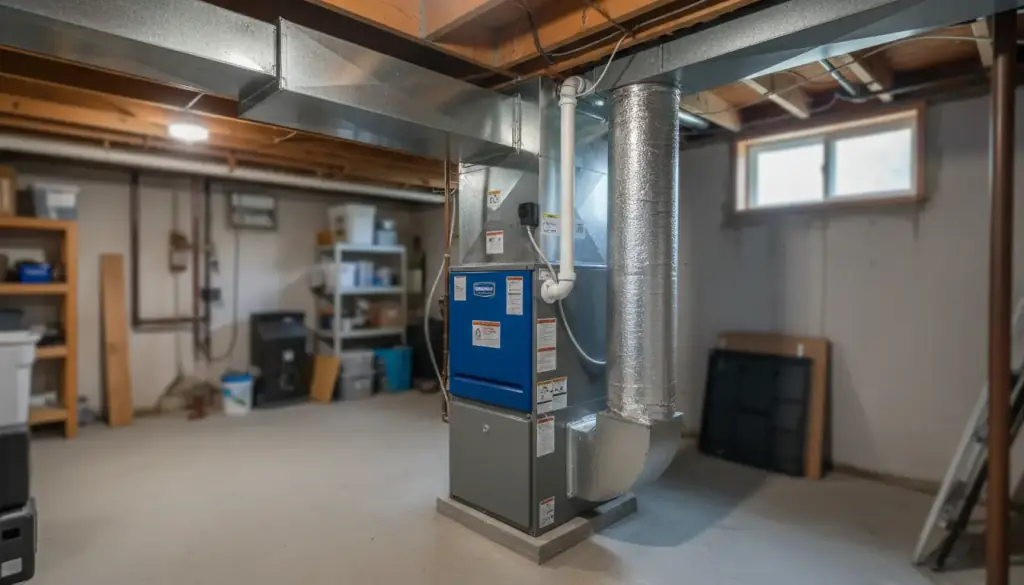
Crawford's Heating & Cooling has posted the same piece of advice to their Facebook page twice, once in February 2022 and again in January 2025. Here it is, word for word: "A tip for everyone that has a heat pump system. Freezing rain is in the forecast. Freezing rain can accumulate on the fan blades and could cause damage to the heat pump. So if you are capable, turn your heat pump to emergency/auxiliary heat to prevent damage during the freezing rain." They're not repeating themselves because they're short on things to say. They're repeating it because Pulaski County gets freezing rain most winters, and most heat pump owners have no idea it's a threat until they're staring at a bent fan blade.
Why freezing rain is different from a normal cold snap
A heat pump's outdoor unit works by moving heat, not making it. To do that in cold weather, a fan pulls outside air across a coil while the compressor runs, and that fan spins for hours at a time on a genuinely cold day. Snow mostly sits on top of the unit and falls off, or the unit's own operation keeps it clear. Freezing rain behaves differently. It lands as liquid and freezes on contact, coating the fan blades, the grille, and the coil fins in a layer of ice that builds while the fan is still trying to turn. A blade that's been cast in ice is now spinning unbalanced, and an unbalanced blade puts stress on the motor bearing and the blade itself with every rotation. Left running through a bad freezing rain event, that's how you end up with a bent blade, a struck coil fin, or a burned-out fan motor, none of which are cheap fixes and all of which are avoidable.
What switching to emergency heat actually does
Most thermostats that control a heat pump have three settings buried in the system menu: heat, cool, and emergency heat (sometimes labeled "emergency" or "aux" on its own). Emergency heat tells the system to stop calling on the outdoor unit entirely and run on backup heat only, usually electric resistance heat strips built into the indoor air handler, or a backup gas furnace on a dual fuel setup. With the outdoor unit off, that fan stops turning, and it can't accumulate ice damage while it's sitting still. The tradeoff is real: backup heat is more expensive to run than a heat pump operating normally, because it's making heat directly rather than moving it. That's a fair price to pay for a few hours during a freezing rain event to protect a piece of equipment that costs a lot more to repair than the extra electricity does.
How to actually do it
- Check your thermostat before the freezing rain starts, not after ice is already on the unit.
- Look for a mode labeled emergency heat, aux heat, or emergency/auxiliary and switch to it manually.
- If you can't find the setting, your thermostat's manual or a quick search on the model number will show you exactly where it lives.
- Leave it on emergency heat for the duration of the freezing rain, then switch back to normal heat once the ice has cleared and temperatures rise above freezing.
- Don't chip ice off the unit yourself with a tool. It's easy to bend a fin or a blade doing it, and the unit will shed the ice on its own once it's stopped running.
When to call rather than guess
If you switch to emergency heat and the house still isn't warming up, or you hear a new noise from the outdoor unit once the ice clears and you switch back, that's worth a call rather than waiting it out. Crawford's is licensed in Missouri and fully insured, and their published policy caps a diagnostic visit at $65 one time so finding out what's wrong doesn't turn into an open-ended bill. They're reachable at (573) 336-0085, Monday through Friday from 8:00 AM to 5:00 PM, with emergency service available outside those hours for exactly this kind of weather-driven problem. A heat pump that made it through a freezing rain event on emergency heat and is running normally afterward doesn't need anything. One that's making a new sound, or won't hold a set temperature, is worth having looked at before the next storm rolls through.
Crawford's Heating & Cooling, (573) 336-0085
Call (573) 336-0085More articles
What a Service Call Should Actually Cost You (And What to Ask First)
Crawford's built a published consumer protection policy around six questions homeowners ask before letting anyone in the door. Here's what's in it.
Gas Furnace, Electric Furnace, Heat Pump, or Dual Fuel: What Actually Fits a Missouri Winter
Pulaski County winters swing from mild to genuinely cold, and the right system depends on that swing more than any brand name.